Sleep and libido. How lack of sleep affects intimacy?


A romantic evening? Great idea. But first, five minutes of rest. And then suddenly it’s morning. Sounds familiar? Alarm clock, coffee, work, chores, shopping, dinner, dishes, and finally that moment when you sit down on the bed. In theory, you have time for yourself and for another person. In practice, your body has already made the decision for you. The pillow wins. Every evening. Not because closeness has stopped interesting you. But because lack of sleep negatively affects libido: fatigue usually outweighs sex drive, and sleep deficiency lowers the levels of hormones such as testosterone and raises cortisol, which together reduce interest in sex.
Published at:
Oct 21, 2026Updated at:
Nov 2, 2026Rate:
Table of content
Lack of sleep and libido: when all you want in bed is sleep
This scenario is not an exception. For many people who notice low sex drive, stress and a shrinking desire for closeness, lack of sleep and libido is a daily reality that is rarely spoken about directly. Because it’s easier to say “I’m tired” or “I have no energy” than to admit that sleep deprivation and libido may have more in common than we think. Stress at work, a to-do list that never ends and chronic sleep deficiency don’t disappear when you turn off the light. They stay with you. In your head, in your body, in your mood.
And mood is only the beginning. Sleep deficiency affects hormonal balance, including sleep and testosterone, cortisol and other hormones responsible for interest in sex. When you regularly sleep too little, your body switches into survival mode. The priority becomes basic functioning, not romantic transports. Low sex drive in this context is not a defect; it’s the logical response of a body that simply doesn’t have the resources for everything at once.
Stress and libido, fatigue and libido, sleep deprivation and libido: these connections appear in scientific studies more and more often, in women and men alike. Chronic fatigue and sleep deficiency are widespread, yet their impact on intimate life and well-being is still easy to underestimate. Understanding this relationship can help explain a drop in libido and show you where to start if you want to improve both sleep and closeness.
This article is for people who want to understand whether a decline in desire for sex may be caused by sleep deprivation, stress or disrupted recovery. Here you will find what research says about the link between sleep and sex drive, what role hormones play, how this mechanism differs in women and men, and what you can do specifically to improve sleep quality and libido, without pathos, without oversimplification and without pretending that one change is enough.
How to improve libido? This is a question with no single answer, but there are a few places worth starting. Sleep is one of them. In the following parts we will look at what science says about the relationship between sleep and sex drive, how hormones react to a lack of rest and what you can specifically change, starting tonight.

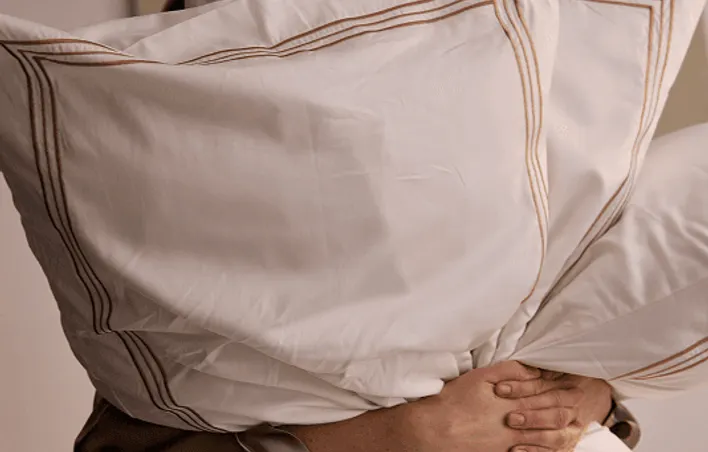
600 Satin Gold Border Pillow / Italian luxury
Soft and smooth. 600 TC cotton sateen and a distinctive border give it a subtle, elegant appearance. Inspired by the bed linen found in Westin hotels.
Check it outWhat is libido and what does it depend on?
Libido is more than hormones
Libido is simply your interest in sexual activity. It is sexual desire and the motivation to engage in sexual activity. Sounds simple? In theory, yes. In practice, it is one of the most complex things that can happen to you. Because whether you feel like closeness in the evening is influenced simultaneously by biology, psychology, the quality of your relationship, and how many times today someone wrote “urgent” in the subject line of an email; relationship issues can weaken emotional closeness and sexual intimacy, which can affect intimacy and lower libido. Fatigue and libido? That’s no random correlation. When body and mind run at full speed all day, in the evening the body chooses rest, not adventure. And it’s hard to blame it.
Why does your libido look different in January than in July? Why is everything fine one month, and the next all you want is a warm blanket? Because low sex drive rarely has a single cause. Low libido and cases of reduced libido are common: 32% of women experience reduced libido at some point in life, 32% of women experience reduced desire in their lifetime, and 15% of men aged 18-59 have desire disorders. Libido naturally changes over time: it depends on age, the phase of the menstrual cycle, the season of life, stress level and what your relationship looks like. A move, a new job, the birth of a child, menopause, or hormone changes: each of these situations can shift the slider of sexual interest in a completely different direction. And that’s normal.
Which hormones affect libido?
Testosterone often appears as the main suspect when the conversation turns to sex drive. Rightly so: it plays an important role in both men and women, and also serves an important function in a woman’s body (yes, women need it too, though in smaller amounts). But sleep and testosterone is only one thread. Estrogens affect the moisture of mucous membranes and sensitivity to touch, and a drop in estrogens, especially during menopause, can lead to vaginal dryness and thereby lower libido. Progesterone can have a calming effect, sometimes too much so. Prolactin, whose level rises, for example, after childbirth or with certain medications, can clearly reduce interest in sex. Hormonal disorders are also one of the common causes of libido disorders. None of them, however, works in isolation.
And then there’s cortisol, the hormone your body produces in response to stress. When the body works in survival mode, sex takes a back seat. It’s evolutionarily logical: when you’re running from a tiger, you’re not thinking about a romantic dinner. The problem is that the modern “tiger” is a deadline, a mortgage and phone notifications. Stress and libido is a combination that works quietly but effectively. Chronic tension suppresses interest in closeness, even if all other conditions seem favorable.
Why won’t a single lab result explain everything?
It’s tempting to think that all you need is to test your testosterone level to understand why lack of sleep and libido form a pair in your case. But a single hormonal result is like a photo of one room in a multi-room apartment: it says something, but doesn’t tell the whole story. Low sex drive usually has many causes at once: sleep deprivation and libido, tension in the relationship, medications, including some medications and antidepressants, mental health, and even how you feel in your own body. That’s why, instead of looking for a single culprit, it’s worth looking more broadly, at the whole context in which you live, sleep and love. Hormonal tests, thyroid tests, glucose and lipid profile will help determine the cause of the problem.
Sleep and libido: what does scientific research say?
Can lack of sleep reduce sex drive?
Scientific studies suggest a link between sleep deficiency and reduced interest in sex. People who are regularly sleep-deprived more often report low sex drive and less desire for closeness, which may also mean reduced sexual function, not just less interest in sex, as poor sleep can contribute to sexual dysfunction, including problems with desire, arousal, orgasm, or comfort, and a general decline in satisfaction with intimate life. That sounds logical: it’s hard to think about anything pleasant when you can barely keep your eyes open. But before we draw far-reaching conclusions, it’s worth remembering one thing: correlation is not causation. The fact that sleep deficiency and reduced libido often go together does not automatically mean that one directly causes the other. Study results can be ambiguous, and interest in closeness is influenced by many factors at once.
Fatigue and libido, however, is a relationship most of us understand intuitively, even without reading scientific publications. Irritability after a sleepless night, or just poor sleep, low mood, no energy for anything beyond surviving the day. Such a state can also negatively affect the experience of sexual pleasure. These states reduce readiness for closeness regardless of what your hormonal results look like. Sometimes hormones aren’t the problem. Sometimes you simply have no strength.
How does sleep length affect libido?
Experts, including the National Sleep Foundation, recommend 7 to 9 hours of sleep per day for adults, and guidance from the Sleep Research Society and other sleep medicine groups generally says a healthy adult should get at least 7 hours a night. Regularly cutting rest below 6 hours is associated in selected studies with poorer well-being, lower energy and lower sexual satisfaction. But the number of hours alone isn’t everything. Sleep quality is just as important as its length. You can spend eight hours in bed, but if you wake up every hour and a half, you miss the uninterrupted pattern needed for restorative sleep. Ongoing awakenings are a form of disrupted sleep, so the body and mind don’t get what they need.
That’s why it’s worth paying attention not only to how much you sleep, but also how you sleep. Frequent awakenings, trouble falling asleep, a morning feeling of being wrecked: these are signs of poor sleep quality and that sleep isn’t fulfilling its function. And when recovery falters, everything suffers: concentration, patience, mood. And yes, interest in closeness too. Recurring sleep problems are worth discussing with a doctor because they can affect sexual health as well as daytime functioning.
Does longer sleep mean higher libido?
Here comes the temptation of a simple equation: more sleep = higher libido. Unfortunately, the body doesn’t work like a calculator. Mechanically adding hours of sleep doesn’t automatically translate into greater interest in sex. Research points rather to the importance of regularity and individual needs. One person feels great after seven hours, another needs eight and a half. The key is to find your own rhythm, not to chase an abstract number.
Sleep deprivation and libido is a topic in which oversimplification comes easily. The truth is that healthy, regular quality sleep supports healthy sexual function, along with physical and emotional well-being. Inadequate sleep can still undermine libido through fatigue, stress, and hormone disruption, even if simply sleeping longer doesn’t fix everything. But it is not a magic switch. If you’re looking for an answer to the question of how to improve libido, start by looking at the quality of your rest. It’s a good starting point. Not the only one, but definitely worth attention.
Sleep and testosterone: why does nighttime recovery matter?
How does sleep affect testosterone levels in men?
Testosterone has its own circadian distribution, and it’s no early bird by accident. The peak concentration of this hormone occurs in the early morning hours, usually between 6:00 and 9:00 a.m. That’s no coincidence. Testosterone production takes place mainly during the deep sleep phase, the part of the night in which the body truly regenerates at the cellular level. If you regularly shorten your sleep, you also shorten the time in which the body does its hormonal work. Age, general health and regularity of the circadian rhythm also matter, and sexual performance is also affected by chronic diseases and the body’s overall condition. In men, libido depends not only on hormones but also on blood flow, and cardiovascular strain can contribute to erectile difficulties. But without adequate sleep, even a young, healthy body loses part of its potential. Some research also links poor sleep quality to hypogonadal symptoms, especially in men working nonstandard shifts.
What does the study by Leproult and Van Cauter say?
In 2011, Leproult and Van Cauter published evidence that inadequate sleep in healthy young men lowered testosterone: when sleep was restricted to 5 hours a day for a week, levels dropped by 10-15%. That is a significant difference. But before you draw far-reaching conclusions: these were laboratory conditions, strictly controlled and short-term. Everyday life is more complex than a research protocol. A single study doesn’t describe your situation. It does, however, show a direction: chronic sleep deprivation is not neutral for hormonal balance. That helps explain one pathway to decreased libido after chronic sleep restriction.
Does sleep deficiency affect hormones in women?
In women, the relationship between sleep and hormones is multifactorial, and, frankly, much harder to describe in a single sentence. Hormonal regulation is affected by the phase of the menstrual cycle, menopause, stress level, medications used and dozens of other variables. In women, lack of sleep may also be associated with problems with vaginal lubrication. Research on women’s sexual function also looks at female sexual response, including desire, arousal, and satisfaction. Poor sleep may also contribute to female sexual dysfunction in some women, although the causes are often multifactorial. Sleep is one piece of this puzzle, but not the only one. In women, fatigue and libido is often a story in which well-being, relationship quality, mental load and physical health play the main roles, while hormones form the background, not the whole picture. That is why the simplification “sleep more and you’ll have higher testosterone” simply doesn’t reflect reality.
Can improving sleep increase testosterone?
Improving sleep can support hormonal balance. That sounds reasonable and is consistent with what we know about physiology. But “support” is not the same as “guarantee an increase.” If your low sex drive or lowered testosterone results from medical causes (endocrine disorders, hormonal disorders, metabolic diseases such as hypothyroidism, other chronic diseases or medication side effects), changing sleep habits alone is not enough. Good sleep creates better conditions for the body. It does not, however, replace diagnostics. If symptoms persist despite healthy habits, it’s worth having hormonal tests done and talking to a doctor, who may recommend hormone therapy if the results point to such a background. You can read more about how sleep deficiency affects hormonal balance in the article Testosterone and Sleep: How Does Sleep Deficiency Affect Hormonal Balance?

Stress, cortisol and libido: why is closeness difficult when your head doesn’t rest?
How does chronic stress affect interest in sex?
You know the feeling when you get into bed and your head is still spinning with tomorrow’s to-do list. It’s hard to think about closeness when the brain is running at full speed. And it’s not just about fatigue: chronic stress activates the so-called HPA axis (hypothalamic-pituitary-adrenal), the body’s internal alarm system. When this system runs non-stop, cortisol levels rise and the body switches into survival mode. Sex drive then takes a back seat; the body simply has other priorities. It’s a relationship many of us feel, even if we can’t name it.
But note: it’s not worth reducing low sex drive solely to cortisol. That would be too simple. Sleep loss and mental tension affect mood, energy, patience, and the ability to be present in a relationship, which can reduce readiness for closeness. Chronic stress can also suppress the production of sex hormones. It is estimated that stress and depression lower libido in 32% of women and 15% of men. Irritability after a hard day, no desire to talk, a feeling of being overwhelmed: all of this lowers interest in sex before hormones even have a chance to weigh in. Fatigue and libido is an equation with many unknowns, and cortisol is only one of them; such overload is also sometimes linked to the problem having a psychological basis and affecting the quality of sexual life and functioning in the relationship.
The vicious circle of stress, sleep deprivation and fatigue
The problem is that stress rarely comes alone and rarely leaves after one night. More often it looks like this:
- Chronic stress → tension and difficulty winding down in the evening
- Poorer sleep quality → trouble falling asleep, awakenings at night
- Fatigue and worse mood → less energy for everyday activities
- Possible lowering of libido → less interest in closeness
- Tension in the relationship → distance, frustration, lack of conversation → even more stress
And the circle closes. Sleep deprivation and libido is not a one-time event; it’s a process that can wind itself up over weeks. Each element reinforces the next, and breaking this cycle requires conscious action on several fronts at once.
Why is talking as important as rest?
The relationship between lack of sleep and libido is a topic that rarely comes up in everyday conversations between partners. And that’s a pity, because silence about fatigue and needs, along with ongoing relationship issues, can erode emotional closeness and over time reduce sexual intimacy more than sleep deprivation itself. When one person interprets a lack of initiative as rejection, and the other simply has no energy for anything after a twelve-hour day, tension arises that has nothing to do with a lack of feelings. Communication in a relationship is in this context as important as recovery. An open conversation also helps in cases of reduced libido and situations when there is no desire for sex, especially if the problem persists for a longer time. Sometimes it’s enough to say: “It’s not about you. It’s that I’m dead on my feet.” If tension, anxiety or difficulties in the relationship don’t go away, psychological therapy, sex therapy, or a consultation with a sexologist may help by offering practical advice tailored to intimacy concerns.
If you want to better understand how cortisol affects your sleep and why winding down in the evening can be so hard, take a look at our article: Cortisol and sleep: why doesn’t stress let us rest?. It’s a good starting point for beginning to defuse this vicious circle, step by step, night after night.
Does sleep deprivation affect libido differently in women and men?
The short answer: yes, but not as simply as it might seem. The longer answer: differences between the sexes exist, but differences between individual people are often much greater. So before we divide the world into two camps, it’s worth looking at the nuances. Because sleep deprivation and libido is a topic in which simplifications rarely help.
Sleep and libido in men
In men, lack of sleep and libido is largely a story about testosterone. As you already know from the earlier part, sleep and testosterone are closely linked: most of the daily production of this hormone occurs during the deep sleep phase. Regularly shortening rest can lower its concentration, which can be felt as low sex drive, a drop in energy and worse mood. Libido in men is, however, also affected by other biological factors, including vascular condition and metabolic health. But that’s not the whole picture. Fatigue and libido in men is also a matter of stress, irritability and simple lack of strength after a long day. It’s also worth mentioning that sleep disorders such as obstructive sleep apnea, with repeated breathing pauses, can contribute to high blood pressure and impaired blood flow, which may worsen erectile dysfunction. Some research also suggests sleep disorders increase risk of subsequent erectile dysfunction even in people without sleep apnea. This doesn’t mean that every sleep-deprived man will experience these difficulties, but the relationship is documented well enough that ignoring it makes no sense.
Sleep and libido in women
In women the picture is even more complex. Research on female sexual health often uses female sexual measures to examine how sleep quality relates to desire, arousal, and satisfaction. Research suggests that sleep quality and emotional well-being often matter more than the sheer number of hours slept. You can sleep seven hours, but if you wake up three times at night and feel like you’ve run a marathon in the morning, it’s hard to expect a desire for closeness to appear in the evening. Fatigue and libido in women is usually a combination of factors: hormonal (cycle phase, pregnancy, menopause; a drop in estrogens may additionally be associated with vaginal dryness and discomfort during intercourse), psychological (stress and libido, low mood, mental well-being) and relational (quality of communication in the relationship, sense of security), which also affect the level of desire for sex. That’s why the question “how to improve libido” rarely has one answer, and that’s good, because simple recipes rarely fit a complicated reality.
Why isn’t there one rule for everyone?
Age, medications taken, health status, life stage, relationship quality: each of these factors modifies how body and psyche react to sleep deficiency. A twenty-year-old after one lost night and a forty-year-old after the third week of chronic sleep deficiency are two completely different scenarios. Gender stereotypes (“men always want it,” “women need a romantic atmosphere”) not only don’t help, but can make honest conversation about needs harder. Individual differences within one sex are usually greater than differences between groups. Instead of looking for a universal rule, it’s better to ask yourself: how do I feel when I regularly get enough sleep? And how does that change when sleep is lacking?
How to improve sleep and support healthy libido? A practical checklist
You already know that the relationship between sleep and libido is more complex than internet headlines suggest. You know that fatigue and sex drive go hand in hand, and that stress can drive them both. It’s time to move from theory to practice. Below you will find concrete steps supporting both the quality of rest and overall well-being. No miracles, just things you can really implement. Even tonight.
1. Take care of regular sleep
Fixed times for falling asleep and waking up, also on weekends, are the foundation of good recovery. Your body likes predictability. When you go to bed and get up at similar times, the biological clock works in your favor: you fall asleep more easily, sleep more deeply, wake up more rested. The goal? 7 to 9 hours of sleep a day, in line with recommendations for adults. And yes, regularity is more important than weekend catch-up sleep. A Saturday marathon of sleeping hours won’t make up for five nights of five hours. It’s like saving money: it’s better to put money aside systematically than to count on a one-time transfer. Regular, consistent sleep patterns help keep the circadian rhythm stable, which can support sexual function as well as daytime energy.
2. Limit stress before sleep
A head full of thoughts about tomorrow’s meeting, unanswered emails, scrolling on your phone: that is not an evening wind-down. Finish work at least an hour before sleep. Such calming techniques help reduce stress and improve mood, which may indirectly support libido. Put away screens. Try the 4-7-8 breathing technique: inhale for 4 seconds, hold for 7, exhale for 8. It sounds simple because it is simple, and at the same time it effectively lowers tension. You can also reach for a short meditation or stretching. The calmer the evening, the better the sleep, and the more energy for what really matters.
3. Introduce regular physical activity
150 minutes of moderate movement per week (walking, swimming, cycling) is physical activity that supports libido not only through better sleep, but also through blood circulation, mood and well-being. Exercise helps regulate tension, improves blood supply to the genital organs and may support hormonal health, while also making it easier to fall asleep. There is, however, one “but”: intense training right before sleep can work the opposite way. The body needs time to wind down after exertion. That is why it’s better to schedule activity for earlier hours. Workout? Done. Steps? Completed. Now it’s time for recovery, which you do lying down.
4. Take care of healthy habits
A healthy diet as part of a healthy lifestyle, limiting alcohol and a sensible approach to caffeine are not tips from a motivational calendar, but concrete lifestyle factors affecting sleep architecture and libido. Alcohol may make it easier to fall asleep, but it disrupts deep sleep and REM phases, the ones in which the body truly regenerates. Alcohol abuse can also have a depressant effect on the nervous system. Healthy fats and a diet rich in zinc support the production of sex hormones. Caffeine? No later than 2:00 p.m., if you fall asleep in the evening. Deficiencies of zinc and magnesium and a too-poor healthy diet can lower libido, and B vitamins support hormonal regulation. And if you feel that sleep deprivation and libido are not the only problem, that you’re struggling with anxiety, low mood or difficulties in your relationship, take care of your mental health. Some people also reach for natural aphrodisiacs and adaptogens such as ginseng as support for sexual health. Talking to a psychologist is not a failure. It’s good sense.
5. Create a bedroom conducive to rest
A temperature of 18-20 °C, darkening, silence. These are sleep hygiene basics, not just bedroom preferences. A comfortable mattress, a well-chosen pillow, bedding that’s pleasant to the touch. Improving the sleep environment is one way to improve sleep hygiene and support better-quality rest. These aren’t whims; they are the conditions in which the body truly rests. Nighttime awakenings often result from overheating, noise or an uncomfortable position. The bedroom should be a place you want to come back to, not only to sleep, but to feel good in. A hotel bed. A home address. No checkout at 11:00 a.m.
6. Don’t ignore chronic problems
How to improve libido? Sometimes the best answer is: make an appointment with a specialist. If low libido or lack of sex drive has persisted for months, diagnostics are sometimes needed to find its causes. If you wake up tired despite long sleep, if you snore loudly and have pauses in breathing, or if you have chronic sleep problems or other sleep disorders, don’t look for a solution in another article, because they can affect sexual function. Some people also see sexual activity as a sleep promoting behavior, but persistent symptoms still deserve proper assessment and treatment rather than self-experiment alone. Sleep apnea, insomnia, hormonal problems, mood disorders, chronic diseases, metabolic diseases or hypothyroidism require diagnostics and medical consultation. Sleep and testosterone, fatigue and libido, stress and libido: these are all topics in which a doctor or psychologist will help more effectively than any list of tips from the internet. Tests and a consultation will help determine the cause of the problem, and depending on the result, the doctor may consider hormone therapy. Taking care of yourself starts with honesty about your own needs.
Sleep comfort and quality of life: why does the bedroom matter?
Good sleep needs the right conditions
You can have a perfect evening ritual, a regular schedule and a bedroom temperature set to the degree. But if you wake up at three in the morning with a numb neck or an arm that has decided to live its own life, it’s hard to talk about deep rest. An uncomfortable position is one of the most common causes of nighttime awakenings, and each one interrupts the sleep cycle and lowers its quality. Support for the head and neck has a concrete meaning here: proper alignment of the cervical spine lets the muscles relax and lets you sleep through the night without interruptions. It’s not a matter of luxury. It’s a matter of physics and anatomy.
What determines the comfort of a high-quality pillow?
A good pillow is more than a soft rectangle. The resilience of the construction matters: a pillow should respond to the movement of the head, not sink under its weight. A polyester filling, used in premium hospitality, combines durability with proper support and breathability. A cover made of cotton fabric, smooth and pleasant to the touch, means contact with the skin doesn’t wake you at night. And finally: matching the height to the position in which you sleep. Someone who falls asleep on their side needs different support than a person sleeping on their back. ROVELLI pillows in the 50 × 90 cm size were designed with all of these details in mind. Springy where it matters. Soft where needed. And decidedly harder to leave in the morning.
Hotel comfort without checkout
You know the feeling when you sleep better in a hotel bed than in your own? Then you return home and wonder what exactly was wrong with your bedroom. The answer is often simpler than you think: it’s often about the pillow, the bedding and a few small changes that create an atmosphere of calm. An evening ritual (putting down the phone, a comfortable pillow, a moment of silence) is not a whim. It’s a daily decision to take rest seriously. And sleep comfort is one of those elements of self-care that pays off the next day: with a better mood, more energy and openness to what the evening brings.
A good pillow won’t solve all the problems in a relationship. Nor will it make up for the sleep you missed over the past week. It can, however, make rest more pleasant. And that’s worth starting with.

FAQ
Why does libido change over time, and is that normal?
Yes, changes in libido are a natural part of life. Interest in closeness is influenced simultaneously by hormones, age, menstrual cycle phase, stress level, relationship quality and overall well-being, so changes can concern both sexual desire and the quality of sexual life. A decline in sex drive in certain periods, e.g. after the birth of a child, during major stress or during menopause, does not have to mean a health problem.
Can fatigue and lack of sleep reduce interest in sex?
Research points to a link between sleep deficiency and lower interest in sex, and chronic fatigue can lead to reduced libido and lower motivation to engage in sexual activity, though it doesn’t unambiguously confirm a direct cause. Chronic fatigue affects mood, hormone levels (including testosterone and cortisol) and overall energy, and the irritability and poorer well-being accompanying sleep deprivation can reduce readiness for closeness regardless of hormone levels.
Does limiting sleep to 5 hours really lower testosterone levels?
In the 2011 study by Leproult and Van Cauter, limiting sleep to 5 hours a day for a week lowered testosterone in young men by 10-15%. This was, however, a result obtained in laboratory conditions; in everyday life, many additional factors affect the hormone level, such as age, stress or health status.
Does sleep deprivation affect women’s libido differently than men’s libido?
Yes, the mechanisms may differ: in men sleep deficiency is more strongly associated with lowered testosterone, while in women sleep quality, emotional well-being and relational factors play the key role; vaginal dryness may also appear, which means poorer lubrication and less comfort during intimacy. However, individual differences within each sex are usually greater than differences between groups, so there is no single rule for everyone.
Can chronic stress lower libido even if cortisol level is normal?
Yes. Stress affects libido not only through cortisol, but also through low mood, fatigue, irritability and a lack of mental energy. Even with normal hormonal results, chronic tension can reduce interest in closeness, so it’s worth looking at stress more broadly than through the lens of a single hormone.
What habits help improve sleep quality and support healthy libido?
The most important are regular sleep (7 to 9 hours at fixed times), limiting stress and screens before sleep, 150 minutes of moderate exercise a week, limiting alcohol and caffeine (no later than 2:00 p.m.) and comfortable bedroom conditions: a temperature of 18-20 °C, silence and darkness. Sleep also includes rem sleep, which typically occurs about 90 minutes after falling asleep, and uninterrupted rest helps preserve these cycles. Such lifestyle elements also support hormonal health and sexual health. If problems persist for months, it’s worth consulting a doctor. Animal studies also found that REM sleep deprivation increases spontaneous erections in male rats, but that is not a reason to sleep less, because overall sexual function still depends on adequate recovery.
What pillow features affect sleep quality and reduce nighttime awakenings?
The key ones are resilient construction providing support for the head and neck, a breathable filling (e.g. polyester used in premium hospitality), a cotton cover that is pleasant to the touch, and matching the pillow height to the sleeping position. These elements help maintain proper alignment of the cervical spine and reduce the risk of awakenings.
Summary
The article analyzes the multidimensional relationship between sleep quality and libido, combining scientific data with practical steps for improving everyday functioning.
- Libido is the result of many factors: a decline in sex drive may have psychological, hormonal, relational and lifestyle-related roots; hormones (testosterone, cortisol, estrogens) interact with the psyche, the relationship and stress level, so a single hormonal result does not explain the problem.
- Sleep quality and regularity matter more than the number of hours: deep sleep is responsible for nighttime testosterone production (peak in the early morning hours), and poor sleep quality and its disruptions can impair healthy sexual function, though correlation does not mean causation.
- Stress, sleep deprivation and declining libido form a vicious circle: chronic cortisol worsens both sleep and interest in sex, and open communication with a partner is key to breaking this cycle.
- Women and men respond through different pathways: in men the hormonal mechanism (a drop in testosterone) dominates, in women emotional well-being and relational context play a larger role, though individual differences exceed differences between the sexes.
- The practical checklist includes six steps: fixed sleep hours, stress reduction, physical activity, optimizing bedroom conditions (including choosing a pillow), and, for chronic problems, a medical consultation or sex therapy, to increase the chances of regaining a satisfying sex life.