Testosterone and sleep. How lack of sleep impacts hormonal balance?

Testosterone and sleep are closely linked: most of the daily testosterone production takes place during sleep, especially in the deep phase, and chronic sleep deprivation can lower its level by as much as 10-15%. The question “how to naturally raise testosterone” is typed into search engines thousands of times a day and usually leads to a list of supplements, miracle diets and training revolutions. The honest answer is less spectacular: healthy habits can support proper hormonal balance, but they do not guarantee that testosterone will rise above your individual norm. If your results fall within the normal range, no combination of habits will “drive them up” like a stock market chart. What you can do is create conditions in which your body doesn’t have to work uphill.
Published at:
Oct 21, 2026Updated at:
Nov 2, 2026Rate:
Table of content
How to naturally raise testosterone while taking care of recovery
This is where sleep plays an important role. Its impact on hormonal balance is one of the better-documented topics in endocrinology, and for adult men who want to naturally support their testosterone levels and improve recovery, energy, well-being and sexual function without immediately reaching for supplements, it is one of the most important starting points. In a controlled study from 2011 (Leproult & Van Cauter, JAMA), limiting sleep to five hours for just one week lowered testosterone levels in young, healthy men by 10-15%. This is a relationship confirmed by subsequent research, and you don’t have to be an endocrinologist to draw a practical conclusion from it: if you want a practical, non-prescription way to support hormonal balance, start with sleep.
Does this mean sleep is the only factor? Of course not. Hormone levels are affected by physical activity, especially regular training, as well as diet, stress, metabolic health and dozens of other variables. But testosterone and sleep is a topic that stands out for one reason: you can start working on it tonight. No prescription, no supplements and no revolution in your life. All you need is a regular bedtime, a dark bedroom, a reasonable temperature and, which is not insignificant, a bed in which you can actually rest.
In the following parts of this article, we will go through specific habits that support hormonal health: from the effect of sleep on testosterone levels, through training and diet, to stress management, metabolic condition, and the signs that mean it’s worth testing your testosterone level and visiting a doctor. We don’t promise miraculous increases in testosterone. We promise something simpler: reliable information and a few things you can implement without reading three endocrinology textbooks. We start with what happens after the lights go out.

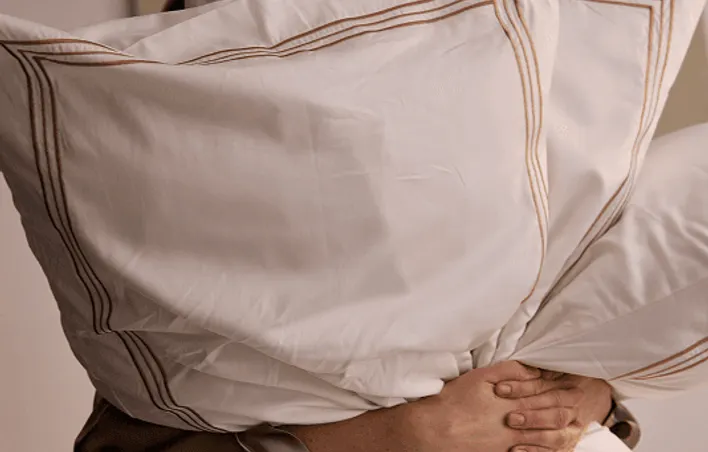
600 Satin Pillow / Ultra premium
Light and classic. 100% cotton, 300 TC. Inspired by the sleep experience at Sheraton hotels - fresh, natural and comfortable.
See for yourselfMake sure you get enough sleep and keep it regular
Why does sleep top the list? Because peak testosterone secretion occurs during the deep NREM sleep phase, and significant release depends on roughly 3 hours of continuous sleep, with testosterone production peaking during the first three hours of the night. This is when the hormonal axis functions properly, and the greatest testosterone secretion takes place during sleep. When you regularly sleep less than 6 hours, your body simply doesn’t have the time to do what it should. The influence of sleep on hormonal balance is not limited to testosterone alone. Chronic sleep deprivation and testosterone is one thing, but on top of that come poorer concentration, a bigger appetite and a mood that is hard to call stable. Sounds familiar? That is exactly why we start with the bed, not the gym. Importantly, optimal testosterone levels may also make it easier to return to deeper sleep phases, so the relationship works both ways.
A regular circadian rhythm sounds trivial, but it makes an enormous difference. A fixed time for falling asleep and waking up, yes, on weekends too, helps synchronize your biological clock, stabilize the pulsatile secretion of hormones, and preserve the nocturnal testosterone rhythm through consistent sleep timing. The importance and length of sleep for hormonal balance is greater than many people realize, so healthy sleep should be treated as a foundation, not an add-on. Your body likes predictability. It doesn’t need surprises at three in the morning, only a repeatable pattern that lets it calmly pass through all the sleep phases.
And since you already know that testosterone and sleep are a combination worth taking care of, it’s time for specifics. Bedroom temperature should be 18-20 °C. Limit blue light from screens for an hour before bed (or at least try, we know it’s hard). A mattress and pillow matched to your body position are not a whim, but a condition for your body to truly recover. These are the elements that make up sleep hygiene. With age, melatonin production declines, and after the age of 30 testosterone levels drop by an average of 1-2% per year, which may further worsen the quality of nighttime rest. If you wake up with a stiff neck or back pain, it’s not a matter of age, it’s a matter of equipment.
And let’s be honest here: a comfortable bed will not raise your testosterone on demand. No serious person promises you that, and neither do we. But it can help create conditions in which your body does what it is meant to do. Rovelli designs pillows with everyday resting comfort in mind, because if natural testosterone optimization starts with the question of sleep, it’s worth taking care of the place where that sleep happens. Soft where it should be. Springy where it matters. And decidedly harder to leave in the morning.
Regular physical activity and strength training
Workout? Done. Steps? Completed. Now it’s time for recovery, which you do lying down. But before you get there, let’s talk about what exercise actually does for your body. Regular physical activity supports metabolic health, improves insulin sensitivity and overall fitness. All of this indirectly benefits hormonal balance. Not because a squat magically raises testosterone, but because a well-functioning body regulates its processes better, including hormonal ones.
A temporary rise in testosterone after training: what does it actually mean?
You’ve probably seen headlines like “strength training boosts testosterone!” And yes, that’s true, but it requires broader context. After an intense training session, testosterone levels do indeed rise. The problem is that this increase lasts only 15-60 minutes and is a physiological response to exertion, not a lasting change in baseline levels. It’s a bit like saying that a hot bath raises body temperature. Technically yes, but it doesn’t mean you have a fever. If you’re looking for an answer to the question of how to naturally raise testosterone, strength training alone is not a miracle solution, although it is one of the pillars of a healthy lifestyle.
More is not always better
Here is a trap that quite a few people fall into. If training is good, then more training must be even better, right? Not necessarily. Overtraining and too much training volume without adequate recovery can work the other way: raise cortisol, the stress hormone, worsen sleep and, as a result, sabotage what you’re trying to achieve. Chronic overload can also impair the body’s recovery, not just training results. And as you already know from the previous sections, lack of sleep and testosterone is a relationship that doesn’t work in your favor. The body needs balance.
An honest conclusion
Regular exercise is a pillar of health, and it’s hard to argue with that. But training alone won’t “fix” your testosterone if you sleep five hours a night, eat whatever, and live in permanent stress. The influence of sleep on hormonal balance is at least as important as how many times a week you go to the gym. Exercise and sleep don’t compete with each other, they work together. That’s why it’s worth taking care of both sides of the equation: solid training during the day and solid recovery at night.
Balanced diet and adequate energy supply
A chronic caloric deficit, the kind from restrictive diets where for many weeks you eat less than you need, acts on the body like a fire alarm. The body treats it as a stress signal and starts saving energy wherever it can. One of the first areas to “go under the knife” is hormone production, including testosterone. If you’re wondering how to naturally raise testosterone, start by checking whether you’re giving yourself enough fuel at all. Adequate energy intake and regular meals also support the body’s recovery, and because testosterone also supports muscle mass and bone density, prolonged under-fueling can affect more than libido alone. No miracle diet will replace regular, nutritionally complete meals.
You’ve probably heard of zinc, magnesium and vitamin D as “hormonal must-haves.” Deficiencies in them are sometimes linked to lower testosterone levels. But here’s the catch: supplementation without confirmed deficiencies is not a proven method of increasing the concentration of this hormone. In other words, swallowing pills “just in case” is a bit like pouring oil into an engine that doesn’t need it. Before you reach for supplements, it’s worth getting tested and talking to a doctor. Concrete knowledge always beats guesswork.
Dietary fats are a separate matter. Steroid hormones, and testosterone belongs to the group of androgens, need fats for their synthesis. Monounsaturated (olive oil, avocado) and polyunsaturated (fish, nuts) fatty acids are not the enemy, but an ally. Eliminating them from your menu in the name of “clean eating” is an idea that may do more harm than good. Your hormones need building blocks, so give them some.
Instead of looking for a mythical “testosterone diet,” go for something simpler and more effective: regular meals, a variety of foods on your plate, sufficient energy intake and support for healthy body composition. Sounds unspectacular? Perhaps. A well-composed diet can support raising testosterone levels, but it does not replace sleep or treatment of hormonal disorders. But the influence of sleep on hormonal balance, physical activity and a balanced diet are the foundations on which your health rests, not one magic ingredient. Daily, “boring” habits do more than the loudest-advertised supplement.

Metabolic health, stress and their effect on hormones
Sleep, training and diet have already been covered. Time for two topics that like to team up, usually at the worst possible moment: metabolic health and chronic stress. Together, they can create a cycle of metabolic disruption tied to both poor sleep and low testosterone. Both influence how your body copes with hormone regulation, including testosterone. And both tend to be oversimplified into slogans like “lose weight and relax.” The relationship between sleep and testosterone also works both ways, so these are not separate problems. Reality is a bit more complicated.
Maintain metabolic health
Adipose tissue, especially visceral fat accumulating around the abdomen, is not a passive energy store. It is metabolically active and is associated with higher activity of aromatase, an enzyme that converts testosterone into estradiol. In some men with abdominal obesity, this means a lower level of free testosterone. SHBG (sex hormone-binding globulin) also matters: a protein that binds and transports sex hormones, and thus affects the difference between the total and free testosterone result. This is not a conspiracy theory, it’s biochemistry.
Does this mean everyone should immediately jump into weight loss? No. Weight reduction is not a universal recommendation for every person. It makes sense primarily for people with obesity and confirmed metabolic disorders, such as insulin resistance, dyslipidemia or metabolic syndrome; in obese men, it is more often weight loss, rather than sleep-focused interventions alone, that is associated with improved androgen levels. In such cases, improving body composition, especially by reducing excess abdominal fat, may ease one source of hormonal suppression and support better hormonal balance. But “support” is not the same as “guarantee.” The influence of sleep on hormonal balance, exercise and diet all work together, not in isolation. Low testosterone may co-occur with obesity and sleep disorders, and low testosterone and excess adipose tissue can create a vicious circle in which coexisting sleep conditions also contribute to lower testosterone.
Take care of recovery and limit chronic stress
Chronic stress raises cortisol levels, and that’s a fact. Its concentration is physiologically highest in the morning and lowest in the evening. Cortisol worsens sleep quality, lowers mood, and makes you scroll your phone in the evening instead of falling asleep. Lack of sleep and testosterone? That relationship works to your disadvantage. But the popular slogan “less stress = more testosterone” is a big oversimplification. Cortisol and testosterone don’t function like a simple seesaw, with one going up and the other down. Their relationship is more complex and depends on context, the duration of stress and individual predispositions.
What can you do specifically? Regular breaks during the day, even five minutes away from the screen. Breathing techniques that require neither an app nor a yoga mat. Limiting stimuli before bed: less blue light, fewer work messages at 11 p.m. This is not magic, and we don’t promise your testosterone will jump. But these are habits that help you rest better. And better rest also supports tissue recovery and hormonal balance. And better sleep, as you already know from earlier sections, is one of the pillars truly worth taking care of.
Once, stress meant running from a bear. Now it means three missed calls and a full inbox. The body reacts similarly, but recovery looks completely different. And it starts the moment you allow yourself to truly stop. In clinical practice, chronic stress and poor sleep often co-occur with symptoms of lowered testosterone.
Sleep disorders and testosterone diagnostics: when to see a doctor
Sometimes you do everything right: you go to bed at a reasonable time, the bedroom is dark and cool, the mattress is comfortable, and yet you wake up feeling as if you hadn’t slept at all. Morning headaches, daytime sleepiness, mood changes, and the impression that coffee has stopped working. If on top of that your partner mentions loud snoring or pauses in breathing at night, this is not a matter of a “bad day.” These may be symptoms of obstructive sleep apnea, a common, underdiagnosed sleep disorder that can effectively sabotage both sleep quality and the influence of sleep on hormonal balance, and such sleep problems can both mimic and worsen low testosterone. Such clinical symptoms also often include difficulty concentrating, which is a common signal of coexisting sleep issues. Untreated sleep apnea can lead to further health consequences, so it requires diagnostics, not dismissal.
When symptoms overlap with low testosterone, potential sleep disorders should be assessed by a clinician as part of a broader workup.
Sleep apnea and testosterone
Untreated obstructive sleep apnea is associated with lower testosterone levels in men, and the repeated arousals behind these sleep disruptions can throw off normal hormone rhythms; at the same time, overlapping symptoms with low t are often what people describe as Low T. The mechanism is fairly simple: repeated micro-arousals at night and the resulting sleep fragmentation disrupt sleep architecture, including the deep sleep phases during which the body produces hormones most intensively. What matters here is not only obesity and nocturnal hypoxia, but also the disrupted continuity of nighttime rest itself. Lack of sleep and testosterone is not an abstract textbook relationship; it’s a concrete set of consequences you feel every day as fatigue, irritability and a drop in energy. Treating apnea, e.g. with a CPAP device, may improve both parameters: sleep quality and testosterone concentration, because the device keeps the airways open through positive pressure. Evidence suggests treatment may help some men, although results are mixed. The treatment of obstructive sleep apnea is chosen according to its cause and severity, from lifestyle changes, through CPAP, to oral appliances and surgical treatment. Near decisions about hormone therapy and CPAP, testosterone replacement therapy should be used cautiously in men with untreated obstructive sleep apnea, because testosterone can affect sleep-related breathing and influences the central drive to breathe during sleep. But the key word is “may,” not “guarantees.” That is why consultation with a doctor is so important, rather than self-diagnosis based on an article on the internet (even this one). Studies have shown that the more apnea episodes, the lower the testosterone level, although the results of hormone therapy and CPAP do not always show significant changes, and some studies track serum testosterone alongside apnea severity and treatment response.
When is it worth testing testosterone levels?
You don’t need to test testosterone “preventively” once a year, the way you check tire pressure before a longer trip. Diagnostics make sense when specific symptoms suggesting testosterone deficiency appear that require medical assessment rather than self-diagnosis: chronic fatigue that doesn’t go away despite regular sleep, reduced libido, erectile dysfunction, low energy, poor concentration, difficulty concentrating or a persistently low mood. If you recognize several of these signals in yourself, especially when a drop in testosterone confirmed by tests is added to them, it’s a good moment to talk to a doctor. Feeling tired alone is common but not very specific. Difficulty falling asleep is not in itself a specific symptom of testosterone deficiency, whereas insomnia after the age of 40 can be one of the signs of hypogonadism. The adverse health effects of persistent short sleep can overlap with symptoms attributed to testosterone deficiency.
What does proper diagnostics look like?
A single result from a private laboratory is not enough to diagnose anything, and appropriate laboratory tests are the basis. Reliable diagnostics require at least two measurements of total testosterone, taken in the morning, preferably between 7:00 and 9:00, on an empty stomach, because its concentration is then highest; when assessing deficiency, clinicians may also consider related hormones such as luteinizing hormone. Testosterone testing may include total testosterone, free testosterone and sometimes also dihydrotestosterone. The results should be interpreted by a doctor, an endocrinologist or urologist, in the context of your symptoms, age and overall health, while also considering possible endocrine or psychiatric disorders rather than attributing everything to testosterone alone. Testosterone concentrations are also affected by stress, diet, sleep and physical activity, so an abnormal result requires a broader assessment. Testosterone and sleep, diet, stress, physical activity: these are all elements of a larger puzzle. No single parameter tells the whole story. That is why, instead of looking for answers in one blood test, it’s worth looking at your habits more broadly and starting with those you have direct influence over. For example, with how and where you sleep every night.
What we really know about individual actions
We’ve already covered quite a lot: sleep, training, diet, stress, sleep disorders and diagnostics. Before you move on, it’s worth gathering all this in one place, without marketing promises and without embellishment. Because if you’re looking for an answer to the question “how to naturally raise testosterone,” you deserve an honest answer, not a slogan from a supplement package.
The overview below shows what current medical evidence says about each of these approaches. Pay attention to one important distinction: supporting healthy hormone regulation is not the same as guaranteeing an increase in testosterone. Healthy habits help your body function as it should - but if your hormone levels are already within the normal range, no list of lifestyle habits will push them beyond their physiological limits.
Getting enough sleep - supports healthy hormonal regulation. Research confirms an association between chronic sleep deprivation and lower testosterone levels; the impact of sleep on hormonal balance is well documented.
Regular physical activity - beneficial for overall and metabolic health. A temporary rise in testosterone after exercise is a normal bodily response, but it doesn’t mean your baseline levels will change permanently.
A balanced diet - helps prevent nutritional deficiencies that can affect hormonal balance. Supplementing without confirmed deficiencies is not a proven way to increase testosterone.
Treating sleep disorders - can improve sleep quality and overall health, but doesn’t guarantee an automatic increase in testosterone. Consulting a doctor is essential when sleep problems persist.
“Testosterone booster” supplements - there is no reliable evidence that most of these products are effective. You’d be better off spending that money on a comfortable pillow - at least you can be sure it’ll help you sleep well.
So, what’s the takeaway? No single action is a magic switch. Testosterone and sleep, diet, and exercise are all pieces of a much bigger puzzle. But if you were to start with just one thing, sleep would be the place to begin. It affects everything else: your recovery after exercise, your appetite, your stress levels, and whether you feel like getting out of bed in the morning or negotiating with your alarm clock for another five minutes.
We’re not promising that a better pillow will boost your testosterone. We’re promising that we designed it to help you sleep comfortably - and let your body take care of the rest. A consistent sleep schedule, a dark bedroom, a comfortable place to sleep, and a solid seven to nine hours of rest. It’s not rocket science. It’s simply a good plan for the night.

Summary: better sleep as a daily investment in health
We’ve gone through quite a few topics: circadian rhythm, training, diet, stress, diagnostics. Time for an honest conclusion. Healthy sleep and sleep hygiene play a key role in maintaining proper hormonal balance. Sleep is not a magic testosterone switch: sleeping one night longer won’t make your hormones jump up on command. But it is one of the few factors you have real influence over every night. You don’t need a prescription, a referral or specialized equipment. You need regularity, the right conditions and a bit of consistency. The influence of sleep on hormonal balance is not a promise of a miracle; it is the calm, daily work of the body that you can simply avoid disturbing.
If you want to start today, focus on three things. First: set a fixed bedtime and wake-up time, and keep your sleep timing consistent, on weekends too (yes, we know it hurts). Second: check the temperature in your bedroom; the optimal 18-20 °C makes a bigger difference than you’d expect. Third: honestly assess your mattress and pillow. When did you last wonder whether your sleeping place really suits you? If you wake up stiff as a board, it’s not a matter of age, but of the surface. These are simple steps that can genuinely improve sleep.
And if, despite good habits, you still feel chronic fatigue, a drop in energy, or suspect that lack of sleep and testosterone may have a common denominator in your case, the next step is a visit to a doctor, not another supplement with a “testosterone booster” label. Diagnostics, repeated blood tests and a conversation with a specialist will give you a concrete answer. If testosterone replacement therapy comes into consideration at all, it should be preceded by diagnostics and conducted under the supervision of a specialist; untreated sleep disorders should be discussed beforehand, because treatment may improve sleep for some people but worsen breathing-related problems for others. No article on the internet, this one included, will replace that.
At Rovelli, we design pillows with the comfort of everyday rest in mind. We don’t promise they will raise your testosterone, because that is not something a pillow can guarantee by itself. However, carefully selected materials and a well-thought-out construction can raise your comfort, night after night. And help you make sure you finally get a proper night’s sleep.
FAQ
Does lack of sleep really lower testosterone levels?
Yes, controlled studies confirm this relationship. At the same time, recent research in healthy young males shows that the timing of sleep restriction matters, not just total sleep length. In one study, limiting sleep to less than five hours a day for a week lowered testosterone levels in healthy young men by 10-15%, showing how short sleep can quickly affect hormone production. Most of the daily production of this hormone takes place during sleep, so its chronic deficiency can negatively affect hormonal balance. It may be crucial whether the sleep deficit affects the first part of the night or the second half of the night. In practice, this kind of sleep loss or insufficient sleep may contribute to lower levels over time.
How many hours of sleep are needed to support proper hormonal balance?
Most studies indicate that adults should sleep regularly 7-9 hours a day, with sleep duration being the variable most often assessed. Chronically shortening sleep to below 6 hours is associated with disturbed hormonal regulation, including lower testosterone levels. Regularity is just as important as length: fixed times for falling asleep and waking up help synchronize the biological clock, and normal testosterone production also depends on preserving rem sleep and slow wave sleep across the night.
Does strength training raise testosterone levels permanently?
Strength training causes a temporary rise in testosterone lasting about 15-60 minutes after the session, but this is a short-term physiological reaction, not a lasting change in baseline levels. Regular physical activity supports metabolic health and overall fitness, which indirectly benefits hormonal balance.
Can diet affect testosterone levels?
Yes. Chronic caloric deficit and deficiencies of key nutrients (zinc, magnesium, vitamin D, healthy fats) can adversely affect hormonal balance. However, supplementation without confirmed deficiencies is not a proven method of increasing testosterone. The most important thing is to eat varied meals regularly and provide your body with enough energy. Diet can help increase testosterone levels mainly when it corrects an energy deficit, deficiencies and too low a fat intake.
Does stress lower testosterone?
Chronic stress raises cortisol, a stress hormone with a distinct circadian rhythm, which can worsen sleep quality and overall well-being, and these factors indirectly affect hormonal balance. However, the relationship between cortisol and testosterone is not a simple seesaw. Reducing stress alone does not guarantee a rise in testosterone, but it helps create better conditions for the body’s recovery. In addition, a disrupted sleep-wake rhythm, e.g. in shift work, can further exacerbate this problem.
How can I check whether my testosterone level is too low?
Diagnostics require at least two measurements of total testosterone taken in the morning, on an empty stomach, preferably between 7:00 and 10:00. A single result is not enough to make a diagnosis. The results should be assessed by a doctor (an endocrinologist or urologist) in the context of symptoms such as chronic fatigue, decreased libido or low mood, while also considering other possible causes, including psychiatric disorders.
Where should I start to improve my sleep quality today?
Start with three specific steps: set a fixed time for falling asleep and waking up (also on weekends), lower the bedroom temperature to 18-20 °C, and assess whether your current mattress and pillow still provide you with comfort. These simple changes can genuinely improve the conditions for recovery. Avoiding alcohol before bed can also help, especially if snoring or mild symptoms of apnea are present. Repeated awakenings or trouble reaching rapid eye movement sleep can undermine recovery even if total time in bed seems adequate.
Summary
The article explains how daily habits, above all sleep, support hormonal balance, while debunking popular myths about “naturally boosting” testosterone.
- Sleep is the foundation: peak testosterone secretion occurs during deep NREM sleep, and a stable night with the first three hours preserved is especially important for the nocturnal testosterone rhythm; chronic sleep deficiency can lower its level by 10-15%, so a regular circadian rhythm and proper bedroom conditions are the first step to implement.
- Training helps indirectly, not directly: the post-exercise rise in testosterone lasts only 15-60 minutes; the real benefit comes from improved metabolic health, while overtraining without recovery can work the opposite way.
- Diet and supplements: no deficiencies, no miracles: chronic deficiency of calories and healthy fats lowers testosterone, but supplementation without laboratory-confirmed deficiencies brings no effects.
- Abdominal obesity and chronic stress are real threats: aromatase activity in adipose tissue and elevated cortisol can suppress testosterone production; it’s worth implementing specific recovery habits instead of the generic “lose weight and relax.”
- Diagnostics requires a doctor, not a single lab result: when disorders are suspected (e.g. symptoms of sleep apnea, persistent fatigue, or other sleep problems that may overlap with low testosterone), repeated tests and medical consultation are necessary; supplements will not replace a proper diagnosis.