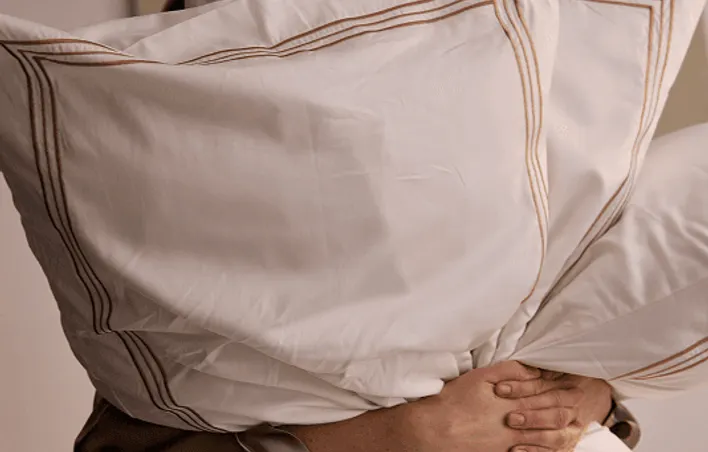
Which pillows are best for sleeping? Types, fillings, and sizes - a selection guide.
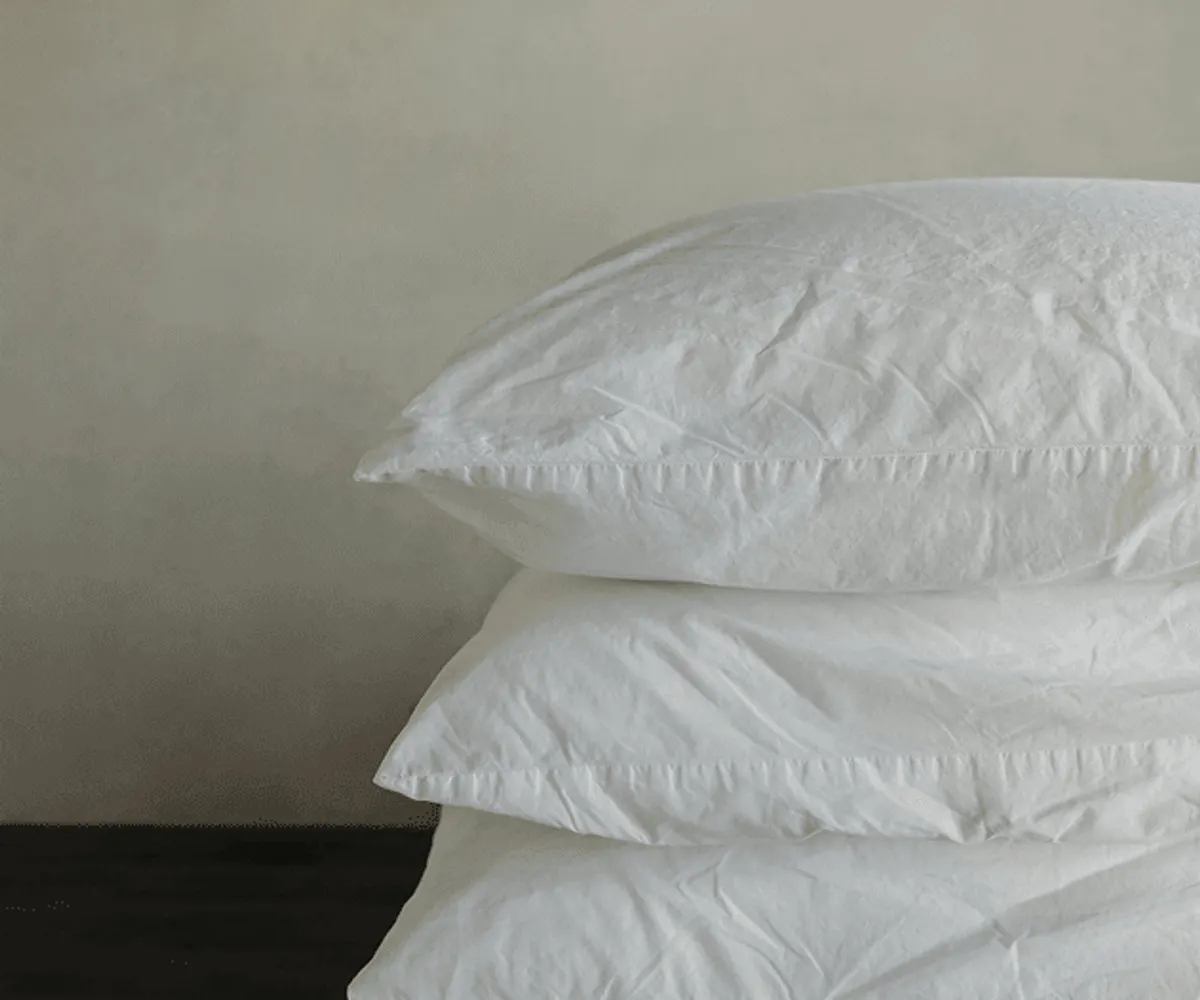
Do you know that feeling when you wake up in a hotel and, for a moment, wonder whether you really have to go home? Sometimes the secret lies in the pillow: its filling, resilience, size, and the way it supports your head. There is no single best pillow for everyone, because which sleeping pillow works for you depends on your sleeping position, mattress, pillow height, type of filling, and simply what you like. The good news? Hotel-level comfort doesn't have to end at checkout. And no, the best pillow doesn't have to be down-filled, orthopedic, or the most expensive one on the shelf.
Several specific factors determine which pillows are best for sleeping - not the price tag or the name of the material. Resilience, neck support, thermal comfort, and durability are aspects you notice every night. High-quality polyester can be just as pleasant as down, and pillows with this type of filling are also found in five-star hotels. Surprising? In the rest of this guide, we'll explain why - and why it's worth changing the way you think about materials.
We'll walk you through five key pillow-selection criteria, compare the most popular fillings (polyester, down, memory foam, and latex), help you choose the right sleeping pillow size, and show you how to match a pillow to your sleeping position. At the end, you'll find a practical pre-purchase checklist and advice on where to buy good sleeping pillows - without guesswork or disappointment.
Published at:
Oct 20, 2026Updated at:
Nov 2, 2026Rate:
Table of content
Which sleeping pillows are best? Five factors that determine comfort
Before you start comparing materials and brands, it's worth knowing what to look for. So, which pillows are best for sleeping? Those that meet five specific criteria - regardless of whether they contain down, foam, or polyester. Below are the factors to consider. No marketing shortcuts, just questions you can ask yourself (or the manufacturer) before buying.
Pillow height and neck support. This is fundamental. A pillow that's too low won't fill the space between your shoulder and head, leaving your neck unsupported. One that's too high forces your neck into an unnatural angle and may cause morning stiffness that even the best coffee won't fix. The right height depends on your sleeping position and shoulder width. There's no single universal measurement, but there's a simple test: when you're lying on your side, your cervical spine should form a straight line with your thoracic spine.
Type of filling and its resilience. Resilience is a pillow's ability to regain its shape after pressure is applied. If your pillow looks like a pancake in the morning, something has gone wrong. Good filling springs back into shape and provides stable support all night, not just for the first hour. Resilience is what distinguishes a pillow you sleep comfortably on from one you keep fluffing and repositioning.
Softness versus suitability for your sleeping position. A soft pillow doesn't mean it lacks support - that's a common myth. A pillow can feel pleasantly soft while still supporting your head properly. On the other hand, a firm pillow isn't always better for your spine. The key is finding the right match: someone who sleeps on their side needs a different level of softness from someone who falls asleep on their back. Rather than looking for the “firmest” or “softest” option, look for the one that suits you.
Cover quality and thermal comfort. The cover is the first thing you feel. The fabric's weave density affects durability, but also breathability and how pleasant it feels against your skin. If your pillow heats up like a hot-water bottle, even perfect filling won't save the situation. Good fabric wicks away moisture, lets your skin breathe, and simply makes you want to rest your cheek on it. This isn't a luxury; it's a condition for restful sleep.
Durability and ease of care. A pillow that can't be washed comes with an expiry date. The ability to machine-wash it, resistance to filling clumping, and the ability to retain its properties after many cycles of use determine whether your pillow will remain comfortable for months - not just the first two weeks.

400 Frette Pillow / Luxury classic
Crafted from Egyptian cotton with a 400 thread count (TC). Inspired by the luxurious fabrics of the Italian brand Frette, as used in The Luxury Collection hotels.
Check it outFive features of a good pillow
Height - Ensures proper neck alignment with your spine. Ask yourself, when lying on your side, does your neck form a straight line with your spine?
The fill's resilience - it ensures stable support throughout the night. Does the pillow return to its shape when pressed with your hand?
Softness/Fitness - Allows you to adjust comfort to your sleeping position. Does the pillow support your preferred sleeping position - side, back, or stomach?
The quality of the cover - it affects breathability, feel, and temperature regulation. Is the fabric pleasant to the touch and prevents overheating?
Durability and care - they determine the pillow's longevity and hygiene. Can you wash a pillow in a washing machine without it losing its properties?

What are the best sleeping pillows made of? A comparison of fillings
When considering which pillows are best for sleeping, it's easy to fall into the trap of dividing them into two simple categories: natural versus synthetic. In reality, there can be huge differences within each category. An inexpensive down pillow and a good-quality down pillow are worlds apart - and the same is true of polyester, foam, and latex. Before deciding what you want your pillow to be made of, it's worth understanding what's actually inside the cover. As usual, the devil is in the details. In this case, in the fibers.
Polyester-filled pillows
Not all polyester fibers are the same. Ordinary polyester - the kind used in the cheapest pillows - quickly clumps together, loses its fluffiness, and after a few months resembles a flat pancake rather than something you'd want to rest your head on, while many softer synthetic options are sold as down alternative pillows because they mimic down-like softness without feathers. Fibers with an advanced structure, such as HCS (Hollow Conjugated Siliconized) fibers or silicone-coated fiber balls, behave very differently. Hollow inside, crimped, and coated with silicone, they are resilient, fluffy, and much better at regaining their shape after pressure is applied. The result? A pillow that looks and behaves like a down pillow, but can be washed at 60°C and dried at home. This kind of down alternative is also usually more affordable than down while offering easier care. No trip to the dry cleaner. No stress.
Down and feather pillows
Down pillows are a classic: soft, lightweight, plush, and easy to shape. Their airy structure can provide excellent airflow, even though loft decreases over time and regular fluffing is still needed. A good soft down pillow cradles your head and provides a sense of lightness that's hard to reproduce with other materials, though other down pillows may differ in loft and support. The catch? Down requires careful maintenance: regular drying and fluffing, and occasional professional cleaning. You should also air out and shake your down pillow regularly to help it retain its volume for longer. Over the years, it loses loft - the feathers break and the down clumps. If you like natural softness and don't mind more demanding care, down may be a good choice. But it's worth knowing that this filling needs more attention from you than many alternatives.
Memory foam pillows
Memory foam, also known as viscoelastic or thermoplastic foam, adapts to the contours of your head and neck. The pillow “remembers” your shape because the foam responds to body heat and weight, moulding itself to the shape of your head and body while providing support. It offers stable, targeted support and is often valued by people with orthopedic concerns or neck pain. The drawbacks? Foam retains heat more readily, so you may feel uncomfortable on warmer nights. Memory foam pillows also cannot be washed; they should only be aired, while the cover can be cleaned. They have a fixed profile, so you can't shape them by hand the way you can a pillow with loose filling. With solid memory foam pillows, that fixed shape stays the same, unlike a shredded memory foam pillow that uses shredded memory foam as a foam fill you can remove or add to adjust loft and firmness. Shredded foam designs are often softer and more moldable, while solid memory foam keeps a set feel that some shoppers see as the best memory foam option for consistent support. Some cooling pillows can help offset the way foam may trap heat, including the Helix ComfortAdjust Cooling Pillow with its GlacioTex cover, while the best memory foam pillow for hot sleepers often uses breathable materials rather than a dense core alone. The Coop Sleep Goods Original is one of the best-known adjustable options and is highly rated for its customizable loft.
Latex pillows
Latex is highly resilient: a latex pillow quickly returns to its original shape and provides distinct, springy support. Among latex models, the Brooklyn Bedding Talalay Latex Pillow is often cited as the best latex pillow for temperature control because latex stays breathable and springy. Durability is among the highest of all filling types. Latex offers good ventilation, especially in perforated versions, but it has a distinctive, relatively firm profile and is heavier than other options. Not everyone likes that feel, so it's worth trying one before buying to see whether it suits your sleeping position.
Filling comparison - what should you know?
High-quality polyester (HCS / siliconized polyester fiber balls) - characterized by fluffiness and resilience similar to down. It is important to pay attention to the amount of filling and the structure of the fibers, as different variants are available on the market. It can be washed at 60°C and has an expected lifespan of around 3-5 years.
Down - characterized by natural softness, lightness, and malleability. The proportions of the filling are important. It should be fluffed up regularly, while thorough cleaning is best left to professionals, as down is delicate. This type of filling has an expected lifespan of around 3-6 years.
Memory foam - easily conforms to the contours of the head and neck, “remembering” their shape. The height and density of the foam, as well as how warm it feels, are important factors. A pillow with this type of filling should be aired regularly, and its cover should be washed regularly. Expected lifespan: 4–6 years.
Latex - provides flexible, resilient support. Important factors to consider include elasticity, profile, weight, and ventilation. A pillow with this type of filling should be aired regularly, and its cover should be washed. Latex itself cannot be washed. This type of pillow has an expected lifespan of 5-8 years.
As you can see, choosing the best sleeping pillow for you depends less on the name of the material and more on its specific construction and your personal preferences. Expensive down does not always outperform well-designed polyester, just as cheap polyester does not represent the entire category. It is worth paying attention to the details rather than the labels.


How should you choose a pillow for your sleeping position?
Wondering which sleeping pillow will work for you? Start with a simple question: what position are you usually in when you wake up? Which position do you sleep in most often? Your answer helps determine your pillow choice. It's the position you sleep in - not the one you fall asleep in - that tells you the most about your needs. Sleeping position determines how high and resilient your pillow should be to keep your neck in a neutral line with your spine. Sounds serious? That's because it is. The wrong height can turn eight hours of recovery into morning neck pain, and an unsuitable pillow can also worsen sleep quality and how you feel in the morning.
Which pillow is best for side sleepers?
When you sleep on your side, a considerable gap forms between your shoulder and head. The pillow needs to fill it. An ideal side-sleeper pillow fills the space between the shoulder and head and keeps the spine aligned, so you need a model 12 - 15 cm high. Resilience matters too: it provides proper support and prevents the pillow from collapsing under the weight of your head during the night. The aim is to stop your neck from drooping down or being pushed upward. The goal is a straight line from the top of your head to your lower back. The firmer your mattress, the higher your pillow may need to be, because your body sinks into it less. If you have broad shoulders, a higher model is usually better, and memory foam can be a good option for people seeking more stable support. Side sleepers who want more customization often do well with an adjustable pillow. The Saybrook Adjustable Pillow is often recommended for side sleepers who need stronger neck support and want to fine-tune the loft.
Which pillow is best for back sleepers?
Things are different when you sleep on your back. For back sleeping, the space between your head and the mattress is smaller, so back sleepers usually do best with a medium-loft, medium-firm pillow - 8-12 cm - that contours the neck without pushing the head too far forward. The key is gentle support that maintains the natural curve of the cervical spine and keeps your head and neck aligned without pushing your chin toward your chest or forcing your head forward, which also helps some back and side sleepers who change positions through the night. A pillow that's too high in this position is a recipe for tension in the neck muscles. One that's too flat lets your head fall backward, while some options better suit back and stomach sleepers instead. The sweet spot? A pillow that contours the neck and supports without taking over.
Which pillow is best for stomach sleepers?
For stomach sleeping, a very flat or thinner pillow is best: it should help rather than get in the way, despite the forced rotation of the neck. A flat pillow (no more than 8 cm) or even no pillow at all limits excessive bending of the cervical spine. The less the pillow raises your head, the less strain there is on your neck. This is one of the few situations in which “less” really does mean “better.”
Which pillow is best for people who change positions during sleep?
If you turn over several times during the night - as most of us do - look for a pillow that quickly regains its shape and provides suitable support in different positions. If that sounds like you, you're a combination sleeper who regularly switches between two or more positions. A responsive personal pillow with adjustable loft can be especially helpful if your preferred sleeping position changes through the night. A firm memory-foam pillow that slowly returns to shape may not have time to adapt before you change position again. Resilient, flexible fillings work better, such as siliconized polyester fibers or down. They respond quickly when you move and don't need to be manually adjusted at three in the morning.
Sleeping position and pillow features
On your side - The recommended pillow height for side sleeping is 12-15 cm. High resilience is also important to ensure consistent support. Recommended fillings: siliconized polyester, down, and latex.
On your back - The recommended pillow height is 8-12 cm, with moderate resilience to provide gentle, stable support. Recommended fillings: siliconized polyester, down, and memory foam.
On your stomach - The recommended pillow height is up to 8 cm (or no pillow at all), with low resilience, as it is important to keep the head only slightly elevated. A pillow filled with soft polyester or thin layers of down is best for stomach sleeping.
Changing positions - If you frequently change positions while sleeping, we recommend a pillow with a height of 10-13 cm, filled with siliconized polyester or down. These fillings offer high flexibility and quickly return to their original shape.
How to recognize a good pillow before buying: checklist and decision support
Before you click “Buy now” or put a pillow in your shopping basket, pause for a moment. Six simple questions will help you distinguish a thoughtfully designed product from an attractively packaged mystery:
- Do you know the exact composition of the filling and cover? If the label only says “polyester” or “synthetic blend” without further details, that's not enough.
- Does the manufacturer provide dimensions and care instructions? Specific measurements and clear guidance suggest that someone actually designed the product rather than merely packaged it.
- Does the pillow have the right height and resilience? Check whether its specifications suit your sleeping position - this is crucial for neck support.
- Does the cover fabric feel pleasant? The fabric is the first thing you feel. If something doesn't feel right when you test it, it will only be worse at night.
- Is there information about certifications and safety? Certifications such as OEKO-TEX® confirm that materials have been tested for harmful substances.
- Do you know the return policy? A good manufacturer isn't afraid that you'll return the pillow. A transparent return policy is a sign that the company trusts its product.
Does a more expensive pillow always mean a better one?
The short answer: no. Price alone isn't a measure of comfort. The perfect pillow is the one that matches your sleep position, fill preference, and support needs - not simply the highest price. A pillow costing PLN 300 with unclear specifications - no details about fiber type, filling weight, or cover composition - may turn out to be worse than a PLN 200 pillow with a transparent construction description and specific parameters. More expensive doesn't mean better if you don't know what you're paying for. What matters is whether the manufacturer can explain why the pillow costs what it does. If the only selling point is the word “premium” on the packaging, keep looking.
Where should you look for good sleeping pillows?
Supermarkets and hypermarkets tempt shoppers with low prices, but product specifications often end with a single sentence on the label. If you're shopping for a new pillow, specialist stores and transparent manufacturers make it easier to compare construction, care, and support. Specialist stores offer more choice and the opportunity to touch a pillow, but you won't always find complete information about the filling's construction or the manufacturer's design philosophy. Buying directly from a pillow manufacturer lets you learn about the exact composition, how the product is made, and the approach to design - without intermediaries or guesswork. That matters because most pillows reveal very little about long-term loft, cleaning, or how the fill is put together. If you're comparing a coop pillow, a Coop Sleep Goods pillow, or other adjustable pillows, look closely at fill quality, adjustability, washability, and return terms. Coop Sleep Goods, for example, is often assessed on whether its removable fill actually helps different sleep positions and whether the materials hold their shape.
If you're looking for a pillow inspired by premium hotel comfort - with complete product specifications, a clear return policy, and a specific description of what's inside - ROVELLI may be worth considering. Its elongated 90 × 50 cm format, carefully selected filling, Italian cover fabric, and no secrets in the product details are all part of the offer. It's also worth considering pillows suited to allergies or specific health needs, if those matters are important to you. If you're going to spend money on sleep, you should know what you're spending it on.
FAQ
What determines the choice of the best sleeping pillow?
The choice depends on five main factors: your sleeping position, mattress firmness, pillow height, type of filling, and personal preferences regarding softness and resilience. Choosing the right pillow affects not only comfort but also spinal health and sleep quality. There is no single pillow that's perfect for everyone. The only pillow that feels right for you is the one matched to your body, sleep habits, and comfort preferences.
Which pillow features have the biggest impact on sleep comfort?
The five key factors are: pillow height suited to your sleeping position and shoulder width; filling resilience (the ability to regain its shape throughout the night); softness suited to your sleeping position; cover quality that provides breathability and a pleasant feel; and durability combined with ease of care, such as machine-washability. How the pillow feels - plush, firm, springy, or softly compressible - also affects whether those features translate into real comfort for you.
How does ordinary polyester differ from HCS fibers and silicone-coated fiber balls?
Ordinary polyester fiber quickly clumps and loses its fluffiness. HCS (Hollow Conjugated Siliconized) fibers and silicone-coated fiber balls have a hollow structure, are crimped, and are coated with silicone, making them resilient, fluffy, and much better at regaining their shape after pressure. Pillows with this type of filling can be washed at 60°C.
Why do five-star hotels use pillows with synthetic filling?
Premium hotels use pillows with high-quality synthetic filling because they provide consistent performance across hundreds of rooms, withstand frequent industrial laundering, and can offer fluffiness comparable to down. The level of comfort matters - not the name of the material on the label.
What makes five-star hotel pillows so comfortable?
It's not just the material, but the combination of several factors: suitable resilience, the right height, a carefully designed internal structure, and quality cover fabric. Many of the best pillows in hotels work because the loft, support, and cover are matched carefully rather than chosen by fill name alone. Premium hotels use down, feathers, or high-quality synthetic fibers; the choice depends on the chain's standards and guests' expectations.
Will a 90 × 50 cm pillow fit on a 160 cm bed?
Yes. Two 90 × 50 cm pillows placed side by side cover the full 160 cm width of the bed exactly. This creates an attractive look, while giving each person a large pillow surface for comfortable sleep.
Which pillow should I choose If I change positions during sleep?
Choose a resilient, flexible pillow that adapts quickly when you change position. Otherwise, you may end up using multiple pillows or constantly folding one pillow between positions, which usually means the loft is wrong. Siliconized-fiber or down fillings are good options because they respond to movement much faster than firm memory foam.
How can I check whether a pillow is good before buying it?
Before buying, check six things: the exact composition of the filling and cover, dimensions and care instructions, height and resilience suited to your sleeping position, how pleasant the fabric feels, information about safety certifications, and a transparent return policy. If a budget model already looks like a flatter pillow in the package, it is unlikely to provide stable support for long. If the manufacturer doesn't provide these details, treat it as a warning sign.
Summary
This article is a comprehensive guide to choosing a sleeping pillow. It explains that there is no single ideal model for everyone - the key is finding one that matches individual needs.
- Five factors determine comfort: height and neck support, filling resilience, softness suited to sleeping position, cover breathability, and durability and ease of washing. Each is worth checking before purchase with specific questions so the pillow supports the head and neck, keeps the spine aligned, and feels comfortable enough for a good night's sleep.
- Filling is about function, not prestige: polyester (HCS, silicone-coated fiber balls), down, memory foam, and latex differ in support, care, and durability, and shredded memory foam, latex, and down alternative each solve different comfort needs, from contouring support to easier care. A well-designed synthetic pillow can rival premium products, and microfiber fill can offer a soft, down-like feel with easy care, while five-star hotels regularly use polyester fillings.
- Sleeping position determines the ideal height and resilience: side sleepers need a higher, more resilient pillow than back or stomach sleepers, and side and stomach sleepers usually need different loft and firmness levels, while back and stomach sleepers are often better off with lower profiles than side sleepers. For people who change positions during the night, versatility is key.
- The 90 × 50 cm format has advantages over a standard square pillow: its elongated shape, used in premium hotels, provides better support when changing positions. ROVELLI deliberately chose this size, pairing it with siliconized fibers and an Italian cover fabric to bring hotel comfort home.
- Before buying, work through the six-question checklist and compare sales channels: a higher price doesn't guarantee a better fit, while buying directly from the manufacturer offers transparency about materials and construction. Readers with neck pain often look at adjustable models such as the Coop Sleep Goods Adjustable Pillow, often cited as best for neck pain, or contouring options such as the Layla Kapok Pillow, which is also rated highly for neck pain relief, for extra support.